AuthorsDrop vs Atticus: Which Tool Fits Your Writing Workflow?
Compare AuthorsDrop and Atticus for writing, formatting, publishing, organising manuscripts and finishing long-form books.
Atticus has become a serious option for independent authors who want to write and format books without passing through several different applications. Its appeal is clear: bring the manuscript into one place, write or edit it, then prepare it for publication.
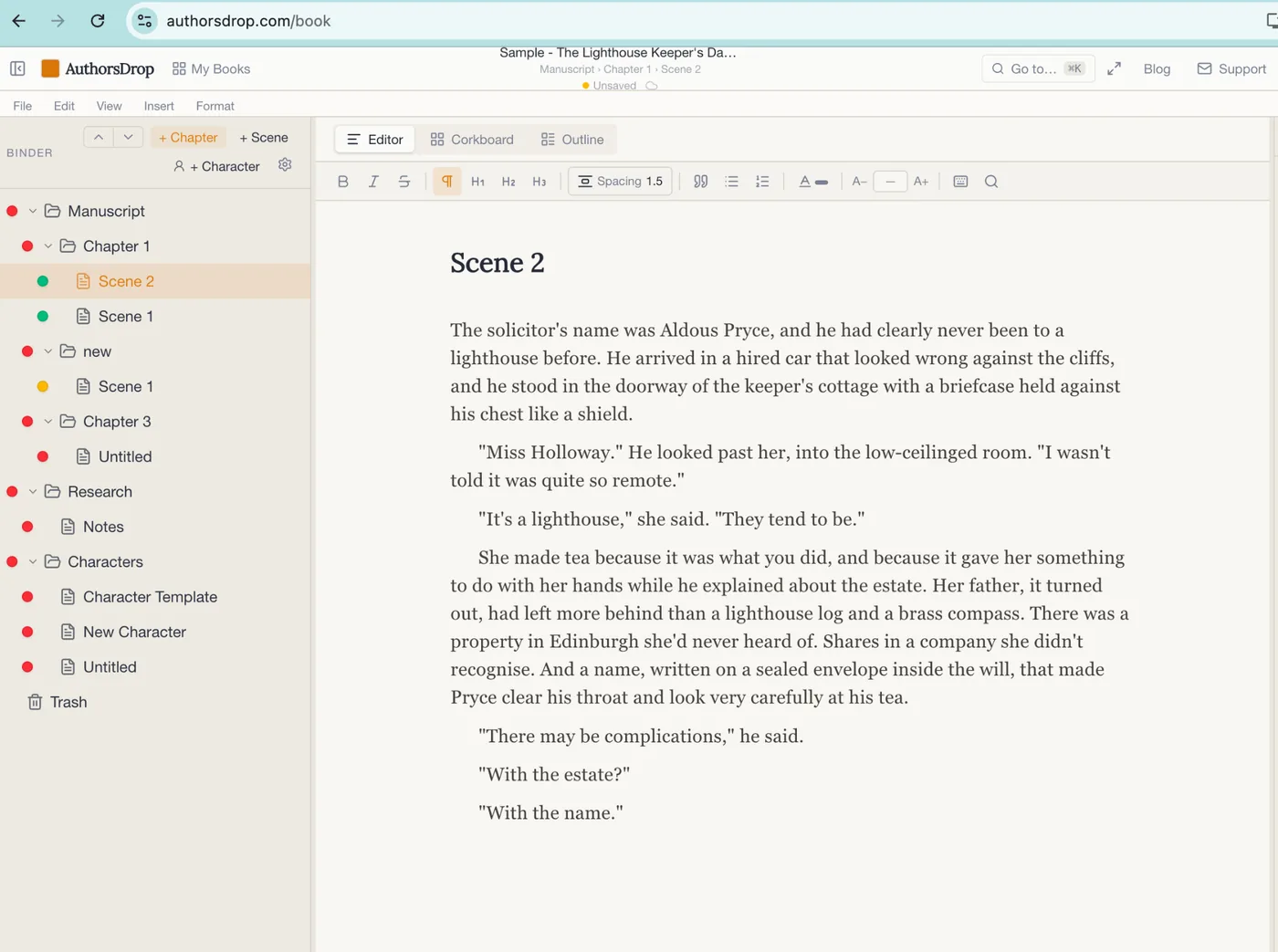
AuthorsDrop covers a broader range of long-form work. Its Binder, project structure and multiple writing modes handle the drafting and revision stages, while AuthorsDrop Press continues prose books into layouts, trim sizes, front matter, EPUB and print-ready PDF.
Both tools speak to authors who are tired of ordinary word processors. The difference is less about writing versus formatting now, and more about scope: Atticus is book-centred, while AuthorsDrop is designed as an end-to-end platform for books, scripts and academic long-form work.
Quick comparison
| Feature | AuthorsDrop | Atticus |
|---|---|---|
| Writing environment | Yes | Yes |
| Book formatting | AuthorsDrop Press | Strong focus |
| Novel writing | Yes | Yes |
| Non-fiction writing | Yes | Yes |
| Screenplay writing | Yes | No |
| Stage play writing | Yes | No |
| Dissertation writing | Yes | Not a primary focus |
| Binder-style structure | Yes | Chapter-based book organisation |
| Scene-level organisation | Yes | More book/chapter oriented |
| Research folders | Yes | Not central |
| Character records | Yes | Not central |
| Writing goals | Yes | Yes |
| Best suited to | End-to-end long-form writing and publishing across multiple formats | Book-centred writing and formatting |
Atticus combines writing and formatting
Atticus is aimed at authors who want to create books and prepare them for publication. It includes a writing environment, chapter organisation, goals and formatting tools. For independent authors, that combination is attractive because it reduces the number of tools involved between draft and finished book.
That makes Atticus especially appealing to writers who think primarily in terms of finished books. If your project is a novel or non-fiction book and your next major concern is formatting it for publication, Atticus belongs on the shortlist.
AuthorsDrop is broader. It is not focused only on the finished book, but it no longer stops before that stage either. The same project can move from planning and drafting into Press when a prose manuscript is ready for production.
AuthorsDrop begins with structure
In AuthorsDrop, the manuscript is organised through chapters, scenes, research and characters. This gives the writer a visible framework for the work while it is still changing.
This is important because writing is rarely a straight line from chapter one to the end. Scenes move. Character details change. Research changes the shape of a chapter. A note added today may save an hour next month.
AuthorsDrop’s strength is keeping those working parts connected.
Formatting is one part of the same AuthorsDrop workflow
Formatting matters. A badly formatted book looks unprofessional and can damage the reader’s trust before the first page has done its work. Atticus rightly treats formatting as a serious part of the independent publishing process.
AuthorsDrop handles the earlier structural work and also carries prose projects into production. Once the manuscript has enough shape to be formatted, Press provides book layouts, trim sizes, front matter and live preview, then exports EPUB or print-ready PDF.
The distinction is therefore not that AuthorsDrop stops when formatting begins. It is that AuthorsDrop starts much earlier and keeps going.
Scene-level work versus chapter-level production
Many formatting systems naturally think in chapters, because chapters are the visible units of a finished book. AuthorsDrop goes deeper by treating scenes as working parts of the manuscript.
A scene can have notes, status, a synopsis and a word goal. It can be moved, revised or reviewed without handling the whole chapter as one block.
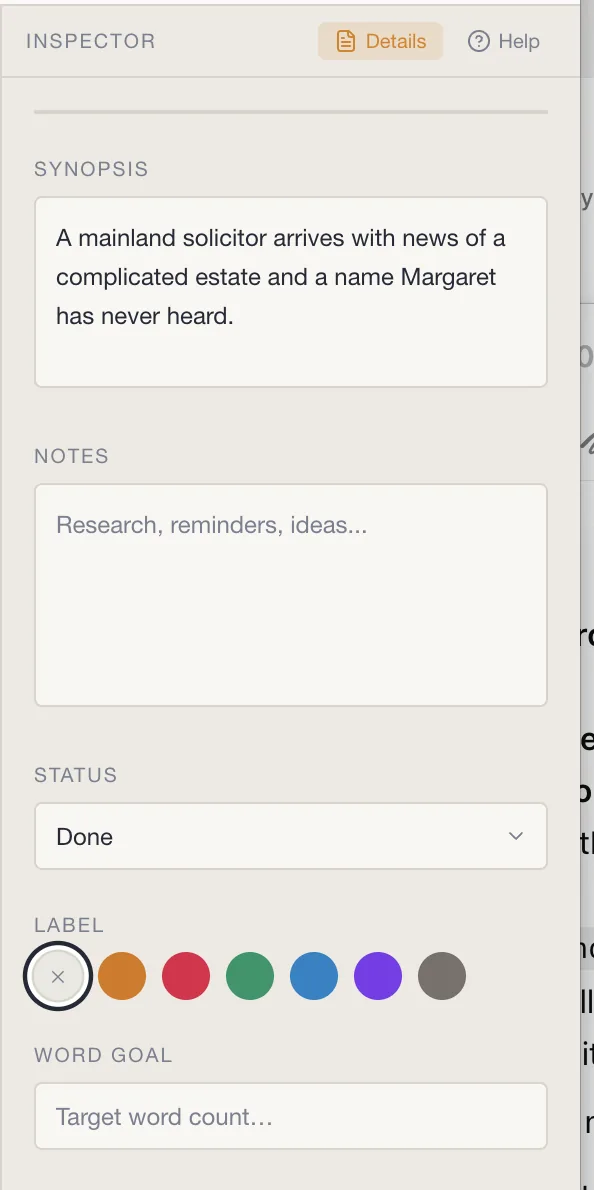
For novelists, this can make revision more manageable. For non-fiction authors, it helps break large arguments or sections into smaller pieces. For dissertation writers, it keeps the project from becoming a single overwhelming document.
Multiple writing forms
Atticus is built around books. AuthorsDrop is built around long-form writing, which includes books but also screenplays, stage plays and dissertations.
That distinction matters for writers who work across forms. A novelist may decide to write a screenplay. A teacher may need course material. A playwright may also be writing a memoir. A student may move from academic work to non-fiction.
AuthorsDrop gives these projects a shared environment rather than asking the writer to switch tools for each form.
Publishing and export
Atticus has a strong publishing orientation. AuthorsDrop Press also covers the production stage for prose books, including live book preview, layouts, EPUB and print-ready PDF.
AuthorsDrop additionally supports screenplay, stage play, dissertation and other long-form workflows that are outside Atticus’s core book focus. Authors can therefore keep a wider range of projects inside one platform and still take prose books through to publication-ready files.
Who should choose Atticus?
Choose Atticus if your main project is a book and your priority is combining writing with strong formatting for publication. It is particularly relevant to independent authors who want to control how their ebook and print editions look.
Who should choose AuthorsDrop?
Choose AuthorsDrop if you want a flexible long-form writing and publishing environment. It is especially relevant if you want chapters, scenes, research, characters and planning views across novels, non-fiction, screenplays, stage plays and dissertations, while also taking prose books into formatting and publication-ready output.
Final comparison
Atticus is a strong writing and formatting tool for authors focused on books. AuthorsDrop is broader, combining long-form planning, writing and organisation with AuthorsDrop Press for prose book production.
The main difference is scope. Atticus is book-centred. AuthorsDrop is intended to carry novels and non-fiction from first idea to publication-ready files while also supporting screenplays, stage plays, dissertations and other structured long-form work.
Frequently asked questions
Is Atticus good for authors?
Yes. Atticus is designed for authors who want writing and book formatting tools in one place, with features for chapters, goals and publishing preparation.
How is AuthorsDrop different from Atticus?
AuthorsDrop combines manuscript organisation across novels, non-fiction, screenplays, stage plays and dissertations with AuthorsDrop Press for prose book formatting, EPUB and print-ready PDF output.
Which tool is better for formatting?
Atticus has a strong focus on book formatting. AuthorsDrop Press also handles prose book layouts, trim sizes, front matter, EPUB and print-ready PDF, while AuthorsDrop additionally supports broader long-form project types.
Which tool should I choose?
Atticus is aimed mainly at authors writing and formatting books. AuthorsDrop is designed for a broader end-to-end workflow across books, scripts and academic projects, with Press handling prose book production inside the same platform.
Source note
This comparison was written with reference to Atticus’s public product and help information describing book writing, chapter organisation, writing goals, habit tracking and ebook/print formatting features.